16 April 2009

P.A. & Co., Stockholm, Sweden


You may believe that Stockholm is the capital of that welfare state placed in the middle of the European Nordics whose blond, tall and fit population only drive Volvos and Saabs, stare in front of the TV watching the Nobel awards ceremony, enjoy commenting the royal family gossips, are able to screw and unscrew thousands of times the same IKEA do-it-yourself furniture and support their ice-hockey national team, the whole of it admired and respected while having a shot of Absolut Vodka (or two!) and listening to ABBA hits. You may also think that there is nothing to eat up there...

Surprise, this is not exactly the case!

Believe it or not, Stockholm is a great city to eat and to have fun (at the same time), a town with plenty of lively restaurants and a good choice of atmospheres, cuisines and prices. As The New York Times put it in an article, ‘Stockholm’s restaurant scene is overheated’...

A short recent visit to this beautiful city was enough to realise that people like going out (a lot!) regardless on whether they go to a recently opened place or to a well known address, on whether the restaurant is in the trendy, elegant Östermalm or in the somewhat bohemian neighbourhoods of Södermalm and Kungsholmen, and whether it is a mainstream address with wi-fi internet connection and some couches to lay on with the lap-top or a posh Michelin starred restaurant with clients aged 50 and more with a shiny Porsche waiting at the door.

For those who would not expect it or simply do not know it, please bear in mind that Sweden and Norway are the countries where most of the recently awarded cooks in well known international contests come from.

In my opinion, this is certainly not because these cooks may be able to only prepare eels, salmons and herrings like anybody else in the world, which is indeed true, but because of their creativity and their confidence in providing something different and tasty yet remaining well rooted to their culture and culinary sources.

Such creativity blossoms a bit everywhere in town, not just in restaurants like the well known "Sturehof", the "Riche", the "Muggen" (a midday informal café with wooden tables and candles everywhere serving simple and a bit too cooked yet tasty pasta and a glass of Jacob’s Creek shiraz – cabernet, the same place where Stieg Larsson advised to have lunch in his bestseller ‘Millenium’), the "Brunnsgatan 1", the "Gondolen", the "Grill", the "Kungsholmen" and "The Veranda" (Grand Hotel), but also the "Mathias Dahlgren", the only Swedish restaurant to have ever been awarded a two Michelin stars ("Edsbacka krog" was the first one). By the way, the chef Mathias Dahlgren is only 40!

"PA & Co." was discovered absolutely by chance when a blond woman clerly in her late fifties and with a hint of Pippi Langstrumpf hippyness stopped pedalling her bicycle next to me in the middle of the street and asked me if I needed some help. The map I was handling may have given her the impression that I was lost.

When I told her I was looking for a restaurant where I could try good Swedish specialities she immediately recommended to head to the somewhat hidden "PA & Co.", an informal place with a clubby atmosphere, small tables and wooden chairs, a couple of chandeliers hanging from the ceiling, a lot of candles (remember we are in Sweden!), a single board with the menu on the wall (only in Swedish), and filled with a clientele ranging from cool intellectuals to media, literature and fashion types.

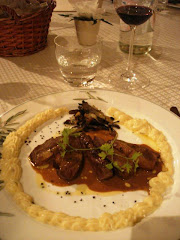
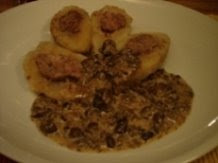
The reindeer terrine covered with bacon on a mushroom sauce and lingonberry jam, smashed potatoes and sliced cucumbers in a side dish might not be a very original choice if you are a Sweed, but it was very very good! (as was the starter - fish eggs on a crispy potato basis -, the jazzy music and the service).

Do not try to go without booking.

Rating: 6.5/10

08 April 2009

MITSUI TEPPAN YAKI, Bruxelles


My colleague Florence Paquay recently visited MITSUI, one of the best, yet unpretentious, Japanese restaurants in Brussels, and wanted to share her experience with Taules del Mon.

MITSUI is the first Japanese restaurant appearing in this blog.

Visité par hasard un dimanche soir, le Mitsui Teppan Yaki est situé derrière la place du Châtelain, rue de Prévot 86 à 1050 Bruxelles.

Accueil chaleureux, service impeccable et souriant, les sashimi mix et makis au thon étaient très frais et tout simplement délicieux. Choix de vins à prix très abordables (nous avons pris le Pinot Noir frais).

Le restaurant était bien rempli un dimanche soir, donc mieux vaut réserver par téléphone au 02/534.09.53 (ouvert 7/7). Il y a la possibilité de réserver autour des plaques de cuisson afin de profiter du spectacle, un kimono vous sera alors prêté.

Le parking dans le quartier n'est pas toujours aisé dans cette rue à sens unique.

http://sites.resto.com/mitsui/

Florence Paquay

28 March 2009

SPARKLING WINES from CALIFORNIA, USA


Catherine Banet, a French friend living in San Francisco for 3 months, recently had the opportunity to visit the wine producing region laying some miles north that city and discovered a new world of tastes.

Please see below the report she kindly provided to 'Taules del Món' about her experiences in that magic region:

« Champagne ? Did you say Champagne ? »

Essayez ceci: prononcez le nom de Champagne et décrivez la première image qui vous apparaît. Il est à peu près certain que les côtes vallonnées d’Epernay, Aÿ et Reims surgiront plus vite à votre esprit que celles de la Californie. Et pourtant …

L’origine de la production de vins mousseux à la méthode champenoise - la plus délicate - remonte à 1882 dans la région de Sonoma au nord de San Francisco sous l’influence des frères Korbel (qui signifie « gobelet », cela ne s’invente pas) originaires de Bohème, l’actuelle République Tchèque.

De nombreux grands noms européens sont par la suite venus bénéficier des atouts des vallées de la région en apportant leur savoir faire et notamment le Domaine Chandon, le Domaine Carneros de la maison Taittinger ou Gloria Ferrer.

Partir à la découverte des vins mousseux californiens offre des expériences très variées. En voici quatre de teneur bien différente.

Iron Horse se situe au cœur de la Green Valley (Russian Valley, Sonoma), à la fin d’une petite route qui vous conduit au paradis du « precision farming ». La dégustation se fait en extérieur, face aux vignobles baignant dans la brume matinale si typique de cette vallée et qui permet à cette dernière de garder une fraîcheur bénéfique au raisin. La spécificité du terroir est exprimée ici à la perfection. Huit 'champagnes' proposés, dont un remarqué Blanc de Blancs 2003 (100% Chardonnay) et une Cuvée Joy inoubliable (10-15 ans d’âge, magnums uniquement).

Pour un 'champagne' à la française, pas besoin de chercher ailleurs que Roederer Estate, logé dans la vallée Anderson (200 km au nord de San Francisco, Mendocino). Malgré un accueil déplorable, les vins sont élégants, travaillés dans la pure tradition de la maison mère. Le résultat en est quatre 'champagnes', uniquement à base de Pinot noir et Chardonnay, dont un Brut Rosé tout en rondeur mais sans trop de douceur. La grande baie vitrée vous permet d’admirer un des plus jolis points de vue sur la vallée (après celle de Navarro Vineyards).

Exemple du compromis réussi, les caves Scharffenberger (toujours vallée Anderson). L’accès au comptoir de dégustation se fait par une petite salle d’exposition d’art aux murs blancs. Le contraste n’est pas sans déplaire. Le vin « estate » promu est un Brut, 65% Pinot noir et 35% Chardonnay. Mais laissez-vous aussi tenter par le Crémant qui n’essaie pas de ressembler à un champagne comme bien trop d’autres vins de sa catégorie.

Scharffenberger Cellars a survécu à une histoire mouvementée qui a vu se succéder les propriétaires depuis sa création en 1981 et fait aujourd’hui parti de Maisons Marques & Domaines. A ne pas confondre avec le chocolatier du même nom situé à Berkeley. Dans ce cas, plutôt associer que confondre ! De nombreuses dégustations thématiques sont d’ailleurs organisées dans la région sur les accords vins et chocolat.

Enfin, Korbel dont rien que le nom, Champagne Cellars, annonce ambition et tradition (vallée de Sonoma, Russian River Valley). Il fut d’ailleurs servi à la cérémonie d’inauguration des cinq derniers présidents américains, y compris Obama (« Special Inaugural Cuvée »). Chacun devrait y trouver son bonheur tant l’éventail de choix est vaste. Onze vins annoncés et en dégustation, y compris des secs, demi-secs, rosés, moscato et un nouveau « Champagne Chardonnay » pensé pour être un « champagne suitable for everyday ». Cependant, l’originalité laissera peut-être ici un peu trop de place à la conventionalité et à la force commerciale.

Ce rapide aperçu se doit de conclure sur deux réflexions. En premier lieu, les vins mousseux du nord de la Californie sont aussi divers que les champagnes français. Ils jouent pour cela sur la richesse du terroir et la variété des raisins utilisés. Alors qu’en France seuls Chardonnay, Pinot noir et Pinot meunier sont acceptés (pour la production de champagne), la législation californienne autorise l’ajout d’autres raisins (Chenin blanc et Colombard chez Korbel) et ne réglemente pas le niveau de sucre.

Autre différence, les vins mousseux californiens seront souvent millésimés. En second lieu, et pour ceux qui en douteraient encore, les Californiens savent élever des vins mousseux de grande qualité qui ne sont jamais aussi bons que quand ils expriment toute leur spécificité, sans copier leurs cousins européens. Doit-on s’en inquiéter ?

Comme pour les autres vins du nouveau monde, la compétition doit être vue comme une opportunité d’excellence et de renouvellement perpétuel.

Catherine Banet

22 March 2009

LE SAINT BONIFACE, Bruxelles


Après l’avoir découvert à l’occasion d’un déjeuner de travail il y a un peu plus de 4 ans, je me suis toute de suite demandé ce que serait la Place Saint Boniface, voire le cartier d’Ixelles où il est placé (et presque caché !) et même Bruxelles toute entière sans un restaurant comme le Saint Boniface.

Toujours au rendez-vous d’une vraie cuisine de terroir française aux clairs accents de la moitié sud du pays, le Saint Boniface est avant tout l’art de Véronique et Philippe Pasquier (salle et cuisine respectivement) dans l’assiette et leur amour pour les produits de qualité, les exécutions toujours parfaites, l’exigence du résultat et la réussite de la régularité dans le temps (très difficile à trouver dans nos jours).

Temple gastronomique à l’ambiance tranquille, chaleureuse et accueillante, au service personnel impeccable, aux murs remplis d’une très belle collection d’affiches et des produits anciens, et aux nappes aux petits carrés blancs et rouges sur les tables, il est sage de demander sans hésiter, juste à l’arrivée, un Lillet (l’apéritif bordelais par excellence - à base de vin et aux écorces d'orange -), afin de mieux entrer en matière et bien sonder les propositions du menu.

Déjà dans les options, celles-ci sont diverses et succulentes : rillettes, cassoulet des saucissons de Lyon, les lentilles du Puy, le pied de porc désossé en crépinette, les œufs en meurette, le sabodet,…sans mentionner la quantité et la qualité des vins.

Le Saint Boniface a fait l’un des lauréats 2004 des Grands Prix de la Cuisine de Tradition (Guide des Connaisseurs / Bel RTL). Malgré ceci, je pense que l'endroit mériterait de plus de visibilité, d'une bonne page web mise à jour, et peut-être de l'organisation d'activités (dégustations de vins français, atéliers de cuisine de terroir avec M. Pasquier...).

Note: 7.5/10

03 March 2009

TARATATA - Hasselt, Belgium


In the middle of Hasselt (Limburg province), there is Taratata, a refined place for mid-30's to have a relaxed dinner on a Friday night either with friends or couple.

The restaurant, whose name derives from 'mixture', 'madness' in Latin, is a clean, quiet place where sober, minimal, modern and elegant architecture (by architects Jo Broukx and Bart Amerika) plays an important role.

The restaurant proposes a fusion, a mixture and a redefinition of tastes and textures by using high quality fresh ingredients to create a well-defined Taratata style.

However, the choice in the menu is a limited one and the too much use of asterisks in the menu indicating the change of price of some dishes draws too much the attention on this (avoidable) aspect.

Among the starters, Taratata is known by its 'Crispy open lasagna with grilled chicken and mushrooms' and the tasty 'Sushi Taratata style'.

Several executions outstand among the mains : the 'Marinated duck fillet, sourdough, mashed sweet potato and Granny Smith apples, sauce of sun-dried cherries and black pepper', the 'Salmon fillet cooked in truffle broth, mushroom ravioli with leek' or 'Grilled lamb with artichokes, mashed lentils and green sauce of black olives and anchovy'.

The concept is good but the restaurant is so worried to define the ideas and values that are claimed to match with the phylosophy of the place and to explain so many things at the same time that it all becomes a bit confusing and ends up by killing the magic.

I regret to have ordered a cinnamon flavoured aperitif, too sweet, unbalanced and which did not match with the food that was about to come to the table.

28 February 2009

RESTO.BAR - Brussels


Do not feel impressed by what could seem a trivial name, the Resto.Bar has nothing of a normal restaurant or bar.

Rather, this trendy place with small Jackson Pollock-like paintings on the brick walls, round bubble lights and rolled cylidrical menus in changing colours, develops an innovative, international and fusion cuisine whose main concept is to serve everything in glass containers, either it be glasses, jars, test tubes, jam pots, etc.

The restaurant, which opened 4 years ago and which is managed by Caroline, proposes a menu divided in five sorts of food, each of which has a completely different personality and taste : starter (made of 4 different finger food composed by the chef and changing every week), fraîcheurs (with compositions made of vegetables, cheeses, mushrooms, etc.), pâtes (pasta), inédits (dishes made either with fish or meat), and after (desserts such as the 'panacotta printemps' or the 'choc show').

However, in order to have a good idea of the different sort of treats, the best option is to go for a menu combining 3 different types of food : a fraîcheur (i.e., the 'Tralala', a tasy composition with eggplant and white cheese in the bottom of the glass, mmmh !), a pâtes (i.e., 'Les Diamants Noirs', penne with white truffle and red coloured cheese !), and an inédit (i.e., the not-so-classic 'Tuna burger').

If you go there during the lunch time, a lighter version of two compositions (instead of three) will be also proposed : either a fraîcheur and a pâtes or a pâtes and an inédit, or a fraîcheur and an inédit).

The service is always ready to help and to try to adapt the menu to the customer preferences and needs.

My female tablemates pointed out that the atmosphere gives the restaurant a predominant ladies' touch which makes the place an ideal one for a true girls night out (even if boys enjoying the music and the food did not seem to be spending a boring night either !)

Resto.Bar is a place to taste and discover!

http://www.restopointbar.be/

26 February 2009

DE LA VIGNE A L'ASSIETTE - Brussels


I have always been a fan of this restaurant (which has been wisely kept far away from the routes of 'fashion' restaurants the city is excelling at these recent days) since the very first time I went there for a business dinner some years ago.

The place, which combines a hint of high quality fine French cuisine with an austere, simple, clean and somewhat cold atmosphere (go there better with friends than in couple), is perfect to appreciate the wide range of tastes and textures.

'De la Vigne à l'Assiette' is a place that offers a great deal of knowledge, perfectionism, detail in the dish, perfect cooking and tasty combinations. Always!

On the top of the project, a great duo made of Eric Van den Bergen (the cook, the one who writes the menus) and Eddy Dandrimont (1st sommelier of Belgium in 1995, a true wine lover who proposes plenty of interesting things) has been a compact one since the restaurant first opened more than ten years ago.

On the dishes side, the menu is renewed on a regular basis, but it's always delicious, really. The last one to date highlights treats such as "Langoustines douces des profondeurs rôties et asperges vertes gratinées au parmesan, sauce bisque", the "Filet de bar grillé, vinaigrette aux herbes et pointes vertes", the l'"Agneau de lait des Pyrénées et haricots coco Tarbais à la tomate séchée".

Small downside: a certain rush to serve and remove plates (perhaps to ensure a perfect coordination between the service at the table and the kitchen) and, in my view, too much routine in the waiter's management of the tables may have led to a loss of spontaneity between the customer and the service (which sadly has a final impact - even if a non-deserved one though - on the overall image of the restaurant itself!).

However, this should not be a deterrent to enjoy this great address, whose customers will head home waiting to go back to the restaurant again.

In relation to wine, the menu includes great classic names, but without forgetting the small denominations of origin coming a bit from everywhere. Everybody agrees (so do I) that the ratio quality / price / discovery of new stuff is perfectly balanced here. In addition, the restaurant organizes regular wine tastings and sells wine in the restaurant too (on demand).

Do not feel astonished if you see a Commissioner of the European Commission, a MEP, the CEO of a big multinational company, or a known Belgian politician / musician... dining opposite your table because... it might perfectly be the case !

The restaurant still receives prizes and awards from time to time.

Rating : 7.1/10

08 February 2009

ARAUCANA - Brussels

To talk about "Araucana" (name given to a local no-tail hen whose eggs are somewhat blue/green and to a conifer from Chili) is to talk about Adela Baraquett Jorat, a formet Chilean trade unionist (now aged 80 and sometimes still present in the restaurant to dance with the customers!) whose leftist ideas brought her to a forced exile to Europe during the Pinochet regime.

Fully covered with press articles, masks from the early civilizations, photos, and other colourful stuff, the walls of Araucana perfectly witness the history, the people and the way of life of both Chili and the rest of South America.

Although one should primarily go to this informal restaurant to have fun, to feel that the world is a place where everybody could live in harmony with the rest of human beings, that values such as respect and conviviality are not necessarily outdated in our times, and to remember that values have nothing to do neither with the age nor with the tough living conditions one might have had in life, no visitor should miss the opportunity to taste the home-made "ceviche" (Chilean national dish), the "empanadas" and the steaks (Argentinian beef).

Please be advised that nobody visiting this folkloric place will be able to go back home without listening a genuine live compilation of the best South American hits of all times from Peruvian José, who confirms with no hesitation that "all women in the world are beautiful, even those who are not".

Note: 5.4/10

Articulo dedicado a Rodrigo, a quien espero ver de nuevo pronto, quizas en su pais.

03 February 2009

LA CUEVA DE CASTILLA - Bruselas


Cuando Gemma, persona de gran humanidad y de valores asentados con la que además comparto apasionantes y animados debates literarios, me comentó que había probado una de las mejores paellas de las que se acuerda en el corazón del barrio de Schaerbeek, simplemente relativicé.

Pensé que después de tanto tiempo fuera de España, quizás demasiado, nuestro paladar podría estar dando síntomas inequívocos de aceptar cualquier arroz más o menos bien resuelto con algún guisante descolorido y alguna que otra gamba congelada de decoración.

Pero me equivoqué. Y mucho!

De hecho, empecé a ser consciente de que me equivocaba en el preciso instante en que Roberto, cuya amabilidad y apurada noción del servicio eficiente y de la calidad parecen no tener límites, me aconsejó - durante la reserva por teléfono - que si algún comensal quería arroz (paella incluída), avisara 20 minutos antes de llegar. Buena señal.

Cuando llegué al restaurante pude comprobar el resultado: arroz de grano perfecto y en su punto, buena textura y consistencia, gambas bien cocidas, guisantes sabrosos, marisco muy apetecible, buen pollo, cantidad generosa pero sin excesos, y lo más importante, la sensación general de estar recuperando parte de los sabores con los que crecimos, aquellos que compartimos con la familia en la playa los días de verano, y que algun día quedaron guardados en la memoria.

Pero paellas a parte, los amigos que probaron la fideuá, igualmente de excelente factura, salieron gratamente satisfechos y con ganas de aconsejar este dignísimo ejemplo de la España culinaria a todo su entorno. A juzgar por las risas, también parecian contentos y animados los comensales de las mesas de nuestro alrededor...

Pero alguien que leyera este artículo podría llevarse a engaño pensando que "La Cueva de Castilla" es un sitio de paellas y fideuás. Nada más lejos de la realidad!

En este restaurante acogedor y elegante abierto hace 12 años y gestionado por los hermanos Ponte - Roberto en el comedor y Javier en la cocina - y que practica una cocina clásica pero abierta a nuevas propuestas, también estan presentes, aparte de las entradas como la bandeja de jamón pata negra cortado a mano, la "dorada al horno al sofrito de tomates y anchoas al Jerez", la "zarzuela de pescado", el "arroz negro con chipirones", el "filete de cochinillo envuelto con una capa de aceitunas negras y lentejas al chorizo", el "filete de cordero al ajo con pimientos del piquillo y vino Albariño", la "fabada asturiana", etc.

Y para terminar, chupitos para todos los gustos y humores: melón, anís, manzana verde, avellana, etc.

A destacar también que "La Cueva de Castilla" aparece en el Gault et Millau (desde 2006) y en la Guía Michelin (desde 2008).

http://www.cuevadecastilla.be/

Nota: 7.8/10

01 February 2009

LA TUPIÑA / AU COMESTIBLE – Bordeaux, France


La découverte de cette magnifique institution gastronomique à la cuisine régionale bordelaise s’est produite tout à fait par hasard, juste après le déroutement et ultérieur atterrissage à Bordeaux de l’avion qui devait m’emmener de Bruxelles à Bilbao pour y passer un week-end.

Crée en 1968 par Jean Pierre Xiradakis, « La Tupiña » (« chaudron » en basque), est sans nul doute une de ces institutions gastronomiques éparpillées dans le monde qui, définissant et résumant à elle seule toute la palette de sensations et de saveurs d’un terroir bien défini, finit par en devenir une ambassadrice, l’ambassadrice de la cuisine du sud-ouest français, de son goût, de son savoir-faire, de l’authenticité, des textures des produits, et de la complexité qui exige d'en bien travailler leur noblesse tout en assurant la simplicité des exécutions.

Mais si une visite à « La Tupiña » vaut déjà bien le détour à Bordeaux, il en va de même pour « Au Comestible », épicerie datant de 1920 (ouverte toujours dans nos jours) qui partage la cuisine avec le frère du trottoir d’en face (ce qui oblige à des multiples voyages ‘assiettes en main’ de Marie-Pierre dont le sourire, l’accueil, la sympathie, les conseils, la connaissance, et l’amour pour le métier font partie intégrante de l’identité de ces temples culinaires).

Avant de commencer, Marie-Pierre nous propose un assortiment de chou-fleur, de radis, d’olives, une baguette entière (à couper avec les mains), un petit verre d’huile de Crète, et un Lillet – apéritif local à base de vin et d’écorces d’orange qui est de plus en plus apprécié.

Déjà dans les plats, nous commençons par les « Cèpes en persillade », simple, savoureux, très bonne option pour saisir les textures de l’excellent Château Lestrille Capmartin (Bordeaux Supérieur 2003 – http://www.lestrille.com/) et inviter à ouvrir ses notes d’élégance.

A continuation, il est temps de passer à « la morue de Bègles (déjà présente en région bordelaise depuis 1830 – à savoir que le restaurant privilégie les poissions d’estuaire) dorée à l’huile d’olive et pommes de terre ‘Grenaille’ sautées » et « l’épaule d’agneau braisée dans son jus et ail en chemise », le tout accompagné d’une poêle d’haricots blancs, tomates et herbes et d’une assiette de frites au sel et au poivre.

Et comme desserts, les excellents « pruneaux à l’Armagnac », délicieux tout simplement.

Nous n’avons donc pas goûté la « lamproie » (poisson typique de la région bordelaise) au goût très spécial et certainement bizarre aux non habitués…

Finalement, il ne faut pas oublier que « La Tupiña » (http://www.latupina.com/) a fait l’objet de plusieurs mentions de reconnaissance telles le « Meilleur bistrot du monde » (International Herald Tribune, NY), « Restaurant de l’année » (Times, Londres), « The Best Bistrot in France » (Zachys Gazette, NY), et qu’il a été classé dans les 50 meilleurs restaurants du monde par le magazine britannique « Restaurant » ainsi que parmi les 10 restaurants au monde « qui jouent avec le feu » par le magazine américain « Gourmet ».

Mais évidemment, tout ça ne serait rien sans la phrase qui définit bien l’idéal qui se cache derrière « La Tupiña » (sortie du site) : « Tous ces honneurs ne doivent pas nous faire perdre la tête, notre ambition n’est pas de devenir un grand restaurant mais de donner du plaisir simplement et de rester ce que nous avons toujours voulu, un lieu « authentique ».

A savoir que le restaurant vend tout une série de livres sur « La Tupiña », la cuisine du sud-ouest, ses recettes, ses vins…

Evaluation : 8/10

22 January 2009

LE CRABE FANTÔME - Bruxelles


Ouvert en 1979, Le Crabe Fantôme est un restaurant atypique, singulier, au décor maritime élégant dont l'ensemble des salles semble évoquer le luxe d'un ancien paquebot.

Ici, toutes les salles ont été soigneusement décorées avec du bois, avec des longues cordes blanches, avec des bouées de sauvetage et d'autres éléments similaires afin de nous rendre dans la cabine du Capitaine, dans la salle du pêcheur ou encore, sur le pont proménade.

Par rapport à la carte, cet endroit propose à la fois des mets classiques de la cuisine française et belge que de la cuisine thaïlandaise. Même si la qualité est au rendez-vous, je ne sais pas si je me suis vraiment trouvé à l'aise avec un mélange d'"entrées thaïes" (nouilles, vapeurs et croustillants divers) et l'excellent, il faut le dire, "carré d'agneau en croûte d'herbes et moutarde, légumes grillées, pommes de terre au lard maigre" qui les a suivi.

Mon conseil donc serait que pour des soucis de cohérence organoléptique, vous vous concentriez soit dans la partie thaïlandaise soit dans la partie française du menu, mais pas dans les deux en même temps!

Chez Le Crabe Fantôme (http://www.lecrabefantome.be/), le service est agréable, décontracté, mais un peu lent et distant du client. Je vous conseille aussi de commander des vins rouges, les blancs étant servis presqu'à temperature ambiante...

Restaurant à revisiter (notamment en été lorsqu'on pourra être à l'ombre des tilleuls dans la superbe terrasse) car j'ai eu la sensation d'avoir raté beaucoup de détails la première fois.

Attention au "macaron" proposé en dessert...il n'en est pas un!

Valoration : 5.7/10

HET GEBAAR - Antwerp


Erika informs about the discovery of this lunch restaurant.

The owner of this wonderful place in the very centre of Antwerp (nearby the botanic garden) is a specialist in bakery and desserts.

The restaurant, which offers a delicate, well finished, well presented and tasteful cuisine in an elegant but unpretentious atmosphere does not offer mains, so people may directly make their way to the desserts.

The place is open from noon to 18h. Bookings are not allowed on Saturdays but you would certainly find a free table if you go there around 14h.

http://www.hetgebaar.be/

Source of the photo: http://www.youropi.com/

20 December 2008

LOLA - Brussels


Opened more than a decade ago, Lola is a cosmopolitan and contemporary place in the middle of the very elegant Sablon.

Lola is also a concept about a stylish, elegant, beautiful black young woman that you would imagine behind the kitchen burners whistling while cooking, fully in love with her boyfriend, serving the tables with grace, a woman that represents the happy side of life, the kind of woman you would like to write a song about if you were a musician...

In a less poetic mood, however, Lola's magic recipe for success is a continued and balanced combination between the quality of the food, the freshness of the products, the creation of new executions and a dose of innovation (when needed), an good offer of wines (good to know that white one is always served the perfect temperature here!), the attentive service and... above all, the regularity through the years and a very well-defined personality.

Indeed, Lola is one of those places where you would like to invite your friends, your relatives, your most beloved visits to Brussels, and you would still be never tired to try once and again.

As far as the starters are concerned, Lola proposes some reminiscent plates from the best brasserie tradition like the 'croquettes de crevettes grises' and a hint of Asian food like the 'tempura de scampi sauce aigre-douce'.

However, a visit to this place should be the opportunity to taste the typically Lolan 'tourelle de crabe, remoulade de céleri rave et tomates sechées' or the 'salade gourmande de haricots verts au foie gras'.

The mains are even greater : 'cabillaud rôti, parmentier au cerfeuil, émulsion de poireaux au beurre de ferme', 'filet de bar au lait d'amandes, risotto aux champignons des bois', or the 'fricassée de volaille aux morilles, tagliatelles', 'cuisse de canard confite aux lentilles vertes de Puy'.

Do not try to go to Lola without booking!

Rating : 7.2/10